Being a mom to a toddler and a baby at the same time is a beautiful experience filled with hugs, milestones, playful moments, and plenty of busy days. Between helping your toddler explore the world and caring for your baby’s everyday needs, even a simple trip outside can require thoughtful preparation.
Having the right everyday essentials can make daily routines easier and help you feel more organized when caring for two little ones at different stages. From a well-stocked diaper bag to practical feeding accessories, comfortable clothing, and simple organization tools, a few reliable items can make a meaningful difference.
Whether you are preparing for errands, family outings, daycare drop-offs, or a relaxed afternoon at home, here are 12 everyday essentials for moms with a toddler girl aged 2–3 and a baby aged 0-1.
This post may contain affiliate links. As an Amazon Associate I earn from qualifying purchases.
1. A Spacious and Organized Diaper Bag
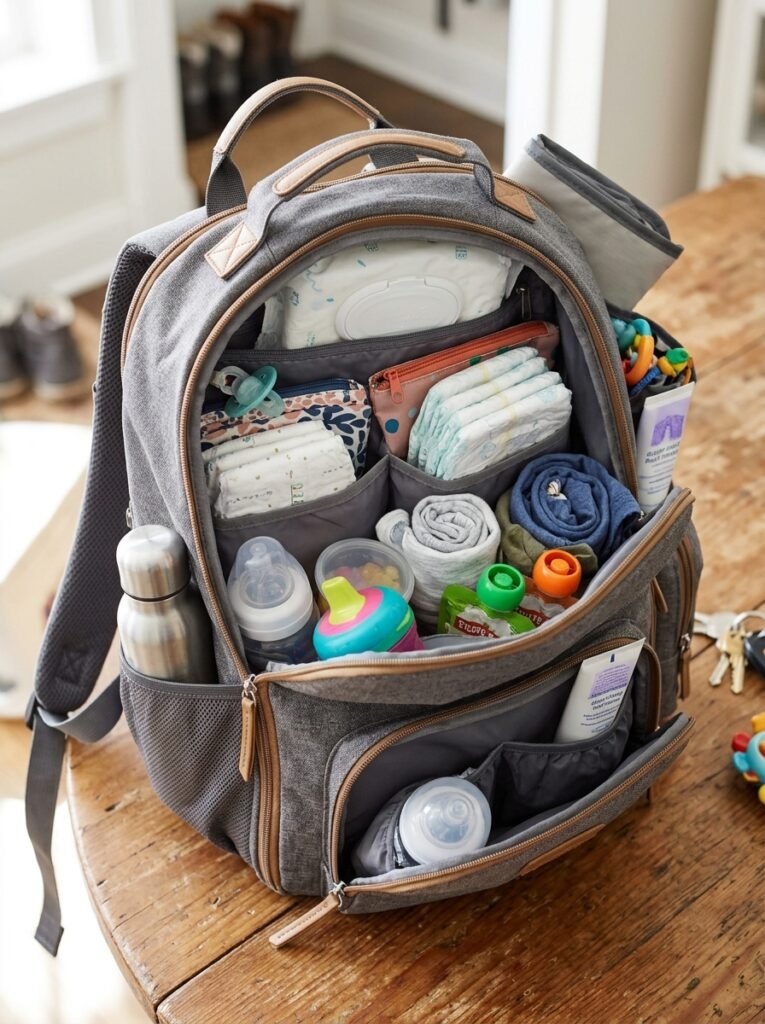
A spacious diaper bag is one of the most useful essentials for a mom caring for both a toddler and a baby. With two little ones, you may need extra diapers, wipes, spare clothes, snacks, feeding supplies, and other everyday necessities. A well-organized bag makes it easier to find what you need without unpacking everything.
Look for a design with multiple compartments, insulated pockets, and comfortable shoulder straps. A backpack-style diaper bag can be especially convenient because it keeps your hands free when holding your baby or helping your toddler.
Consider using small pouches to separate baby supplies from toddler items. This simple organization system can save time during diaper changes and unexpected messes.
2. A Portable Changing Mat and Diapering Essentials
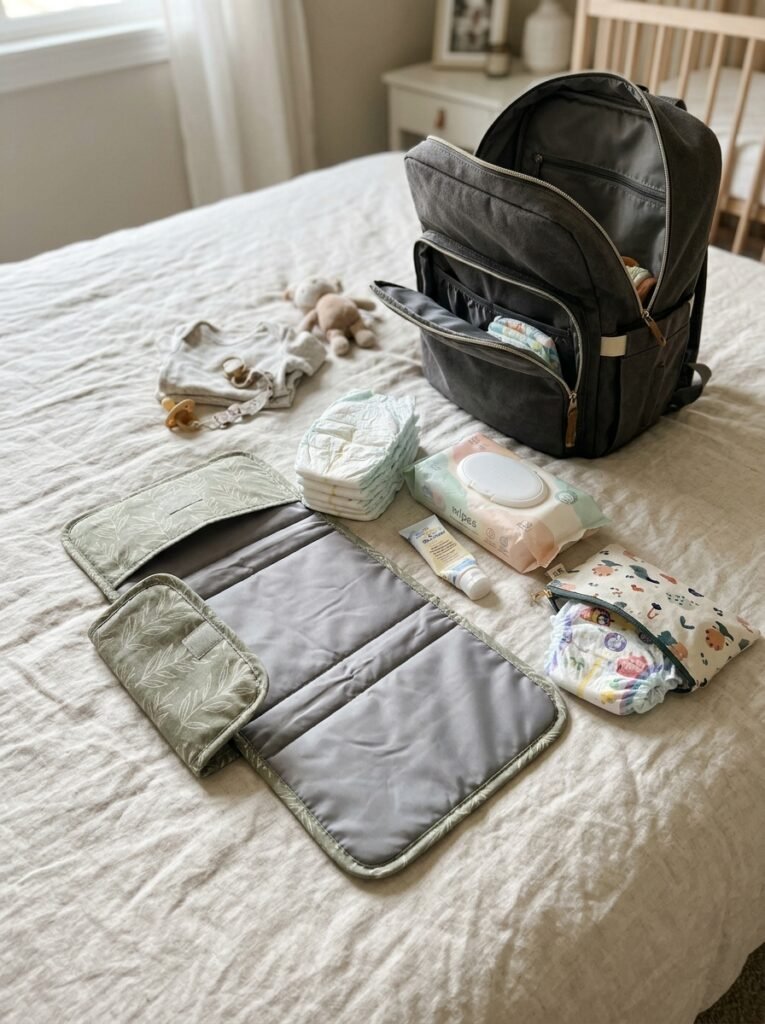
Diaper changes can happen almost anywhere, so a portable changing mat is a practical addition to your everyday bag. It provides a designated surface when you need to change your baby’s diaper while traveling or visiting family.
For your baby, pack enough diapers for the expected length of your outing, fragrance-free wipes if preferred, and a suitable diaper cream recommended for your child’s needs. Keep a separate small pouch for your toddler’s spare underwear or pull-ups if she is in the potty-training stage.
Choose a changing mat that folds easily and can be cleaned according to its care instructions. Remember to use safe changing practices, including keeping one hand on your baby and never leaving them unattended on an elevated surface.
3. Comfortable Everyday Outfits for Both Children
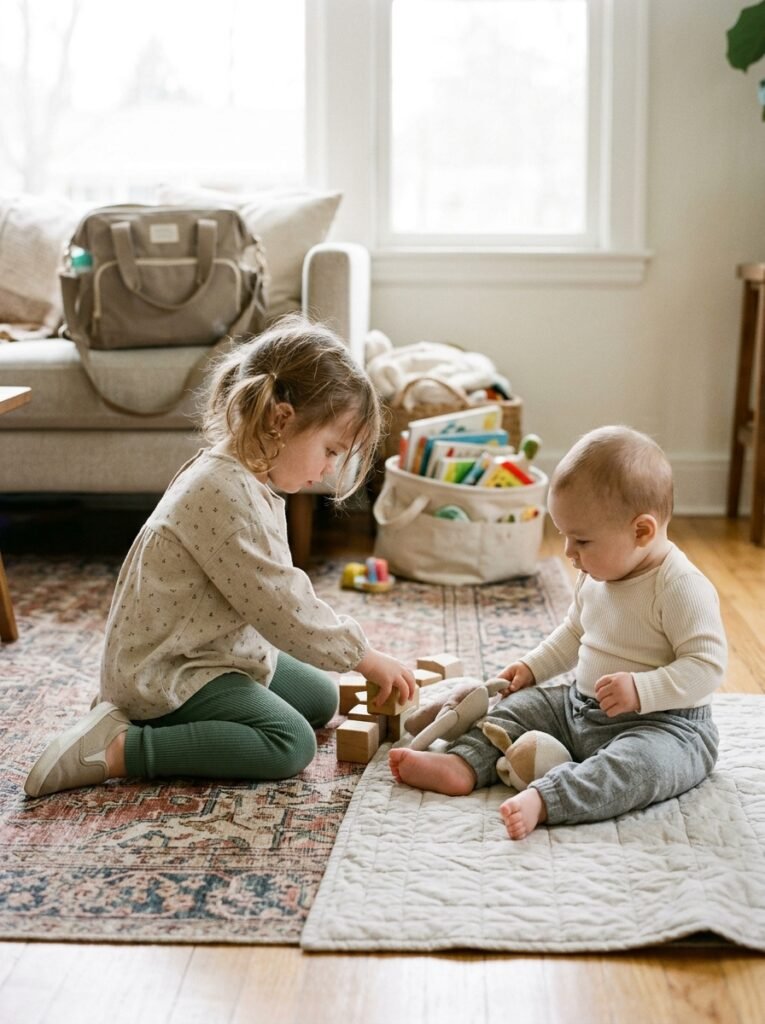
When you are caring for two young children, comfortable clothing can make daily routines easier. For your toddler girl, choose simple outfits that allow her to run, play, and explore. Soft leggings, cotton tops, easy dresses, and comfortable shoes are useful everyday options.
For your baby, practical bodysuits, footed sleepers, soft trousers, and easy-to-change outfits can simplify dressing and diaper changes. Keep a few spare clothing items in your diaper bag for spills, food messes, and diaper leaks.
A coordinated neutral color palette can make mixing and matching easier, but comfort should always come first. Choose clothing that suits the weather, fits properly, and allows both children to move freely.
4. Spill-Proof Toddler Water Bottle
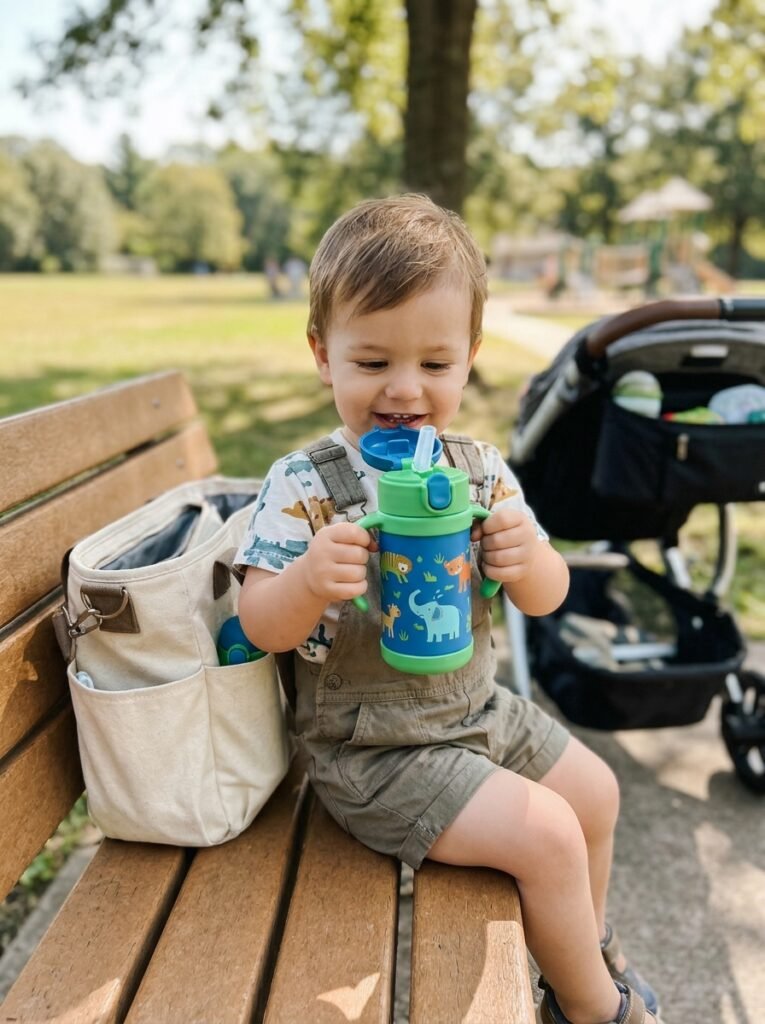
A toddler-friendly water bottle is a useful item to bring when leaving the house. At ages 2–3, children are becoming more independent and may enjoy carrying their own water bottle or asking for a drink during outings.
Look for a lightweight design with easy-to-use handles, a secure lid, and parts that can be cleaned thoroughly. A bottle that fits into your diaper bag or stroller organizer is especially convenient.
Choose a size your toddler can comfortably hold. You can also encourage her to drink water throughout the day by making the bottle easily accessible during supervised activities. Remember to clean it regularly and check that all parts remain in good condition.
5. Baby Feeding Essentials
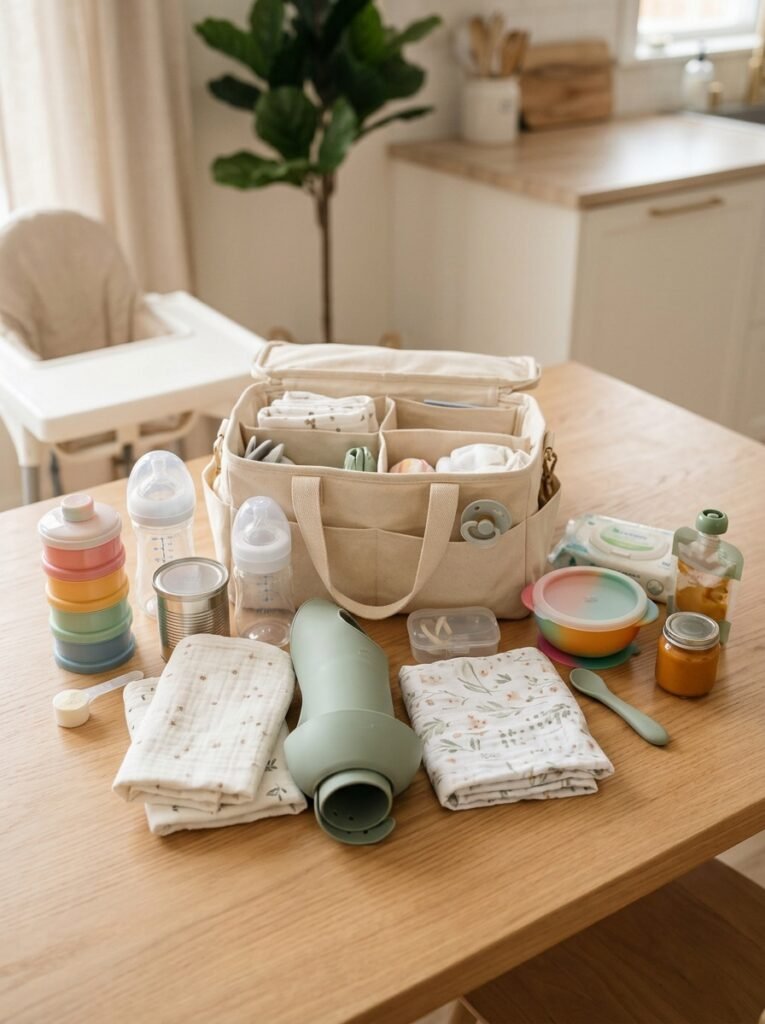
Feeding supplies depend on whether your baby is breastfed, formula-fed, or already eating complementary foods. Keeping a small, organized feeding kit can make outings easier and help you avoid forgetting important items.
Depending on your baby’s needs, useful supplies may include:
- Clean bottles and age-appropriate nipples.
- Formula and feeding supplies, if formula-feeding.
- Burp cloths and bibs.
- Breastfeeding cover, if you prefer to use one.
- A clean spoon and suitable food container for a baby who has started solids.
For babies beginning complementary foods, follow age-appropriate feeding guidance and prepare foods in safe textures. Always supervise your baby while eating, and avoid foods that pose choking risks.
6. Toddler Snacks and a Snack Container
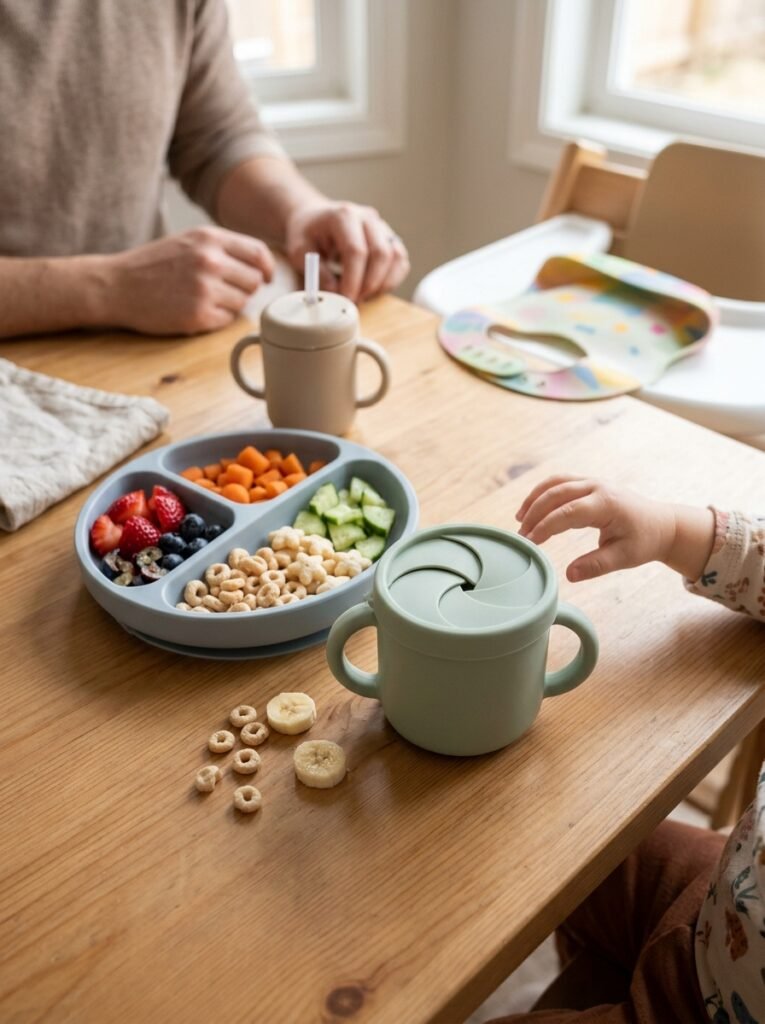
A small snack container can be helpful when your toddler gets hungry between meals. Having suitable snacks ready can make errands, appointments, and family outings more manageable.
Choose a container that is easy to open, easy to clean, and suitable for your toddler’s age. Depending on her dietary needs and feeding skills, options may include soft fruit pieces, appropriately prepared vegetables, or other age-appropriate snacks.
For safety, always supervise your toddler while eating. Prepare foods in shapes and textures that reduce choking risks, and avoid common choking hazards such as whole grapes, whole nuts, popcorn, and large chunks of hard food. A snack container is useful, but it should never replace attentive mealtime supervision.
7. A Lightweight Stroller with a Practical Storage Basket
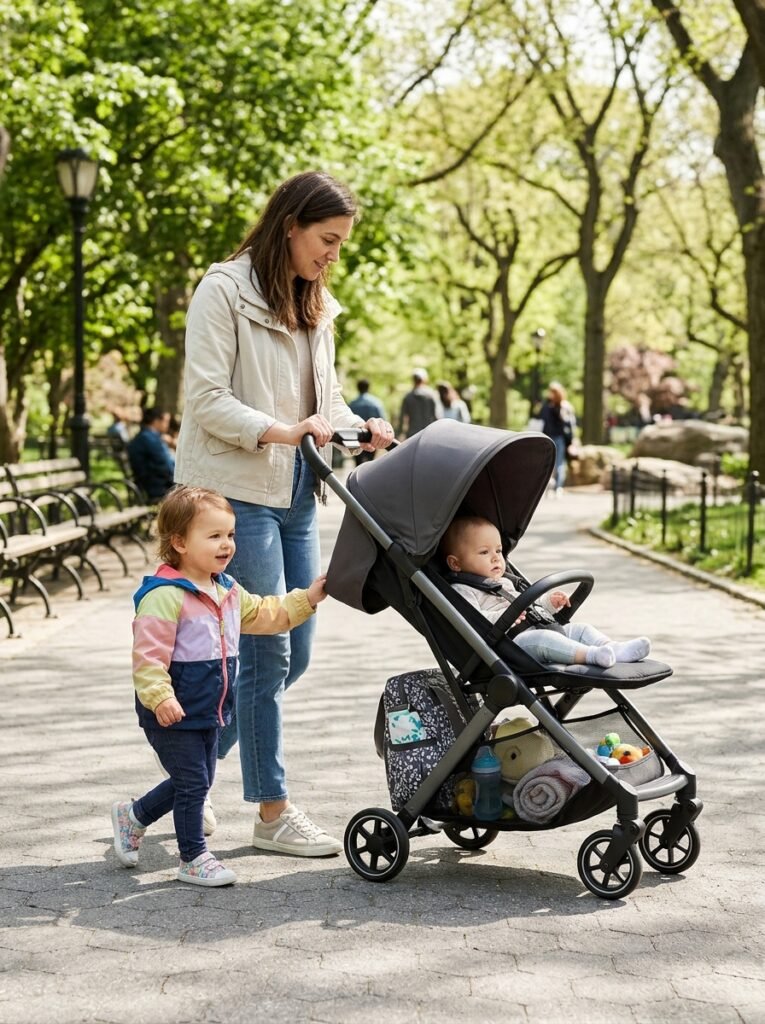
A stroller can be extremely helpful when taking both children outside. Your toddler may enjoy walking for part of the outing but become tired after a while, while your baby may need a comfortable place to rest during supervised outings.
Choose a stroller that suits your baby’s age, weight, and developmental stage. Check the manufacturer’s instructions for appropriate seat positioning, recline settings, and use from birth. Some babies require a compatible bassinet or fully reclining newborn setup.
A practical storage basket can hold your diaper bag, spare clothing, and other essentials. If you are considering a stroller for two children, compare its size, weight, maneuverability, and compatibility with your daily routine.
8. A Comfortable and Properly Fitted Baby Carrier
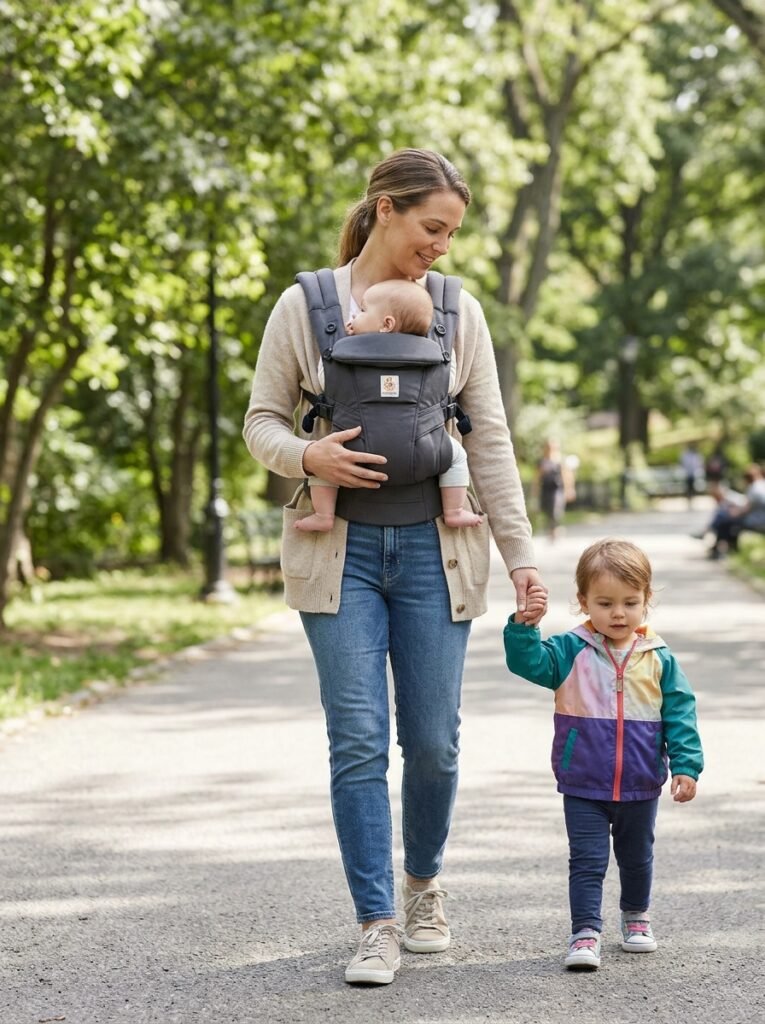
A baby carrier can be useful when you need to keep your baby close while having your hands available to assist your toddler. It can be especially helpful during short walks, household tasks, or outings where maneuvering a stroller is difficult.
Choose a carrier designed for your baby’s current age, weight, and developmental stage. Follow the manufacturer’s instructions carefully and make sure your baby is positioned safely, with their face visible, airway clear, and chin away from the chest.
A properly fitted carrier should support your baby appropriately while distributing weight comfortably for you. Check the fit regularly as your baby grows, and never use a carrier in a way that prevents you from monitoring your baby’s breathing and position.
9. A Small First-Aid and Hygiene Kit
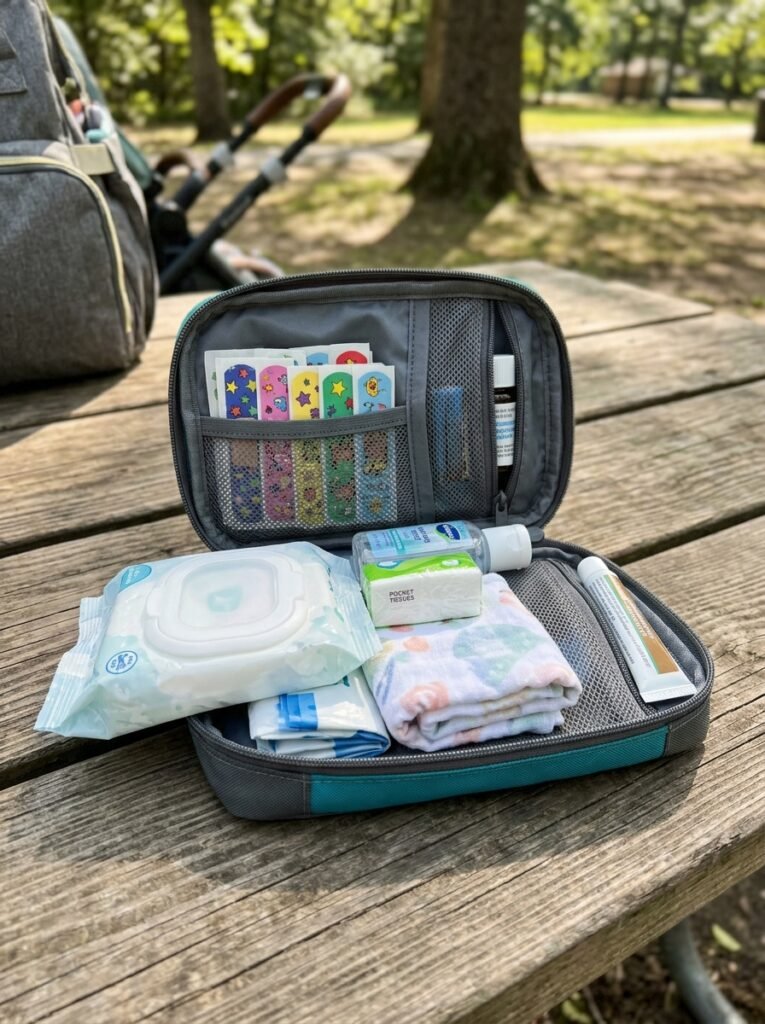
A compact hygiene kit can be useful for everyday outings with two young children. Small messes, minor scrapes, and unexpected diaper changes are part of family life, so having a few basic supplies nearby can be reassuring.
Depending on your children’s needs, you might include:
- Child-appropriate adhesive bandages.
- Tissues and baby wipes.
- Hand sanitizer for adult use.
- A small clean cloth.
- Disposable bags for soiled clothing.
- Any essential medication prescribed for your children, stored securely and used according to medical instructions.
Keep the kit separate from food and feeding supplies. Store medications and small items safely out of children’s reach. For serious injuries, allergic reactions, or concerning symptoms, seek appropriate medical help rather than relying on a travel kit.
10. Spare Clothes and Weather-Appropriate Layers
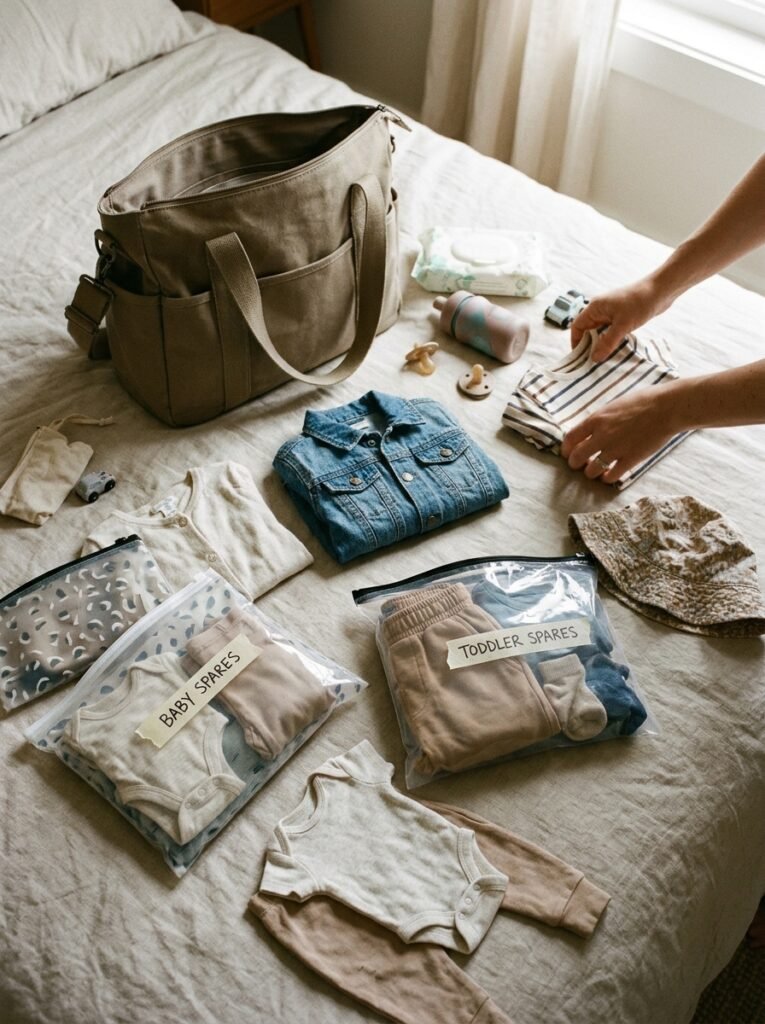
Spare clothing is especially important when traveling with a toddler and a baby. Spills, diaper leaks, food stains, and unexpected weather changes can happen during even a short outing.
Pack at least one complete spare outfit for your baby and an extra top and bottom for your toddler. Depending on the season, include a cardigan, light jacket, sun hat, or other suitable layers.
For your toddler, consider easy-to-change outfits with comfortable waistbands and simple closures. For your baby, pack clothing that allows convenient diaper changes. Keep spare items in separate waterproof or washable pouches to make them easy to find and keep clean.
11. Toddler Entertainment and Comfort Items
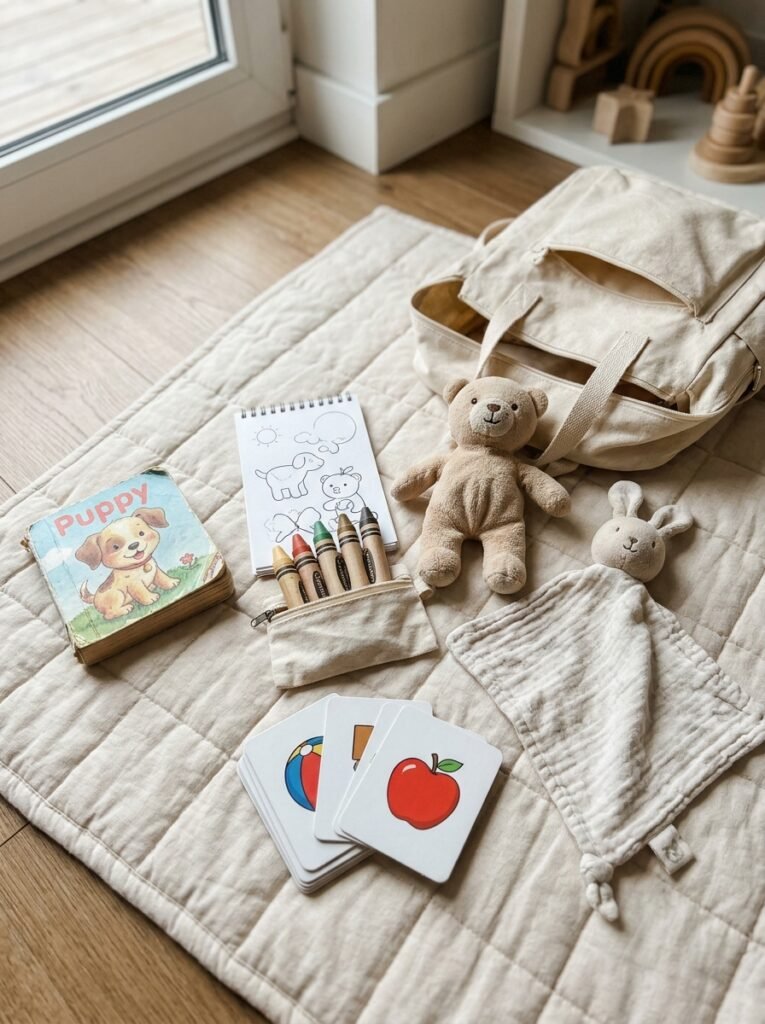
Toddlers have active minds and short attention spans, so a few small activities can be useful during waiting times, car rides, or appointments. Rather than carrying a large collection of toys, choose two or three simple items that are appropriate for your child’s age.
Some practical ideas include:
- A small board book.
- A chunky toddler-safe coloring activity with suitable supplies.
- A soft toy appropriate for her age.
- A simple matching or picture game.
- A familiar comfort item for transitions.
Check toys regularly for loose parts, damage, or pieces that could become choking hazards. Keep small items away from your baby, especially as babies begin exploring objects by putting them in their mouths.
12. A Family Routine and Organization Planner
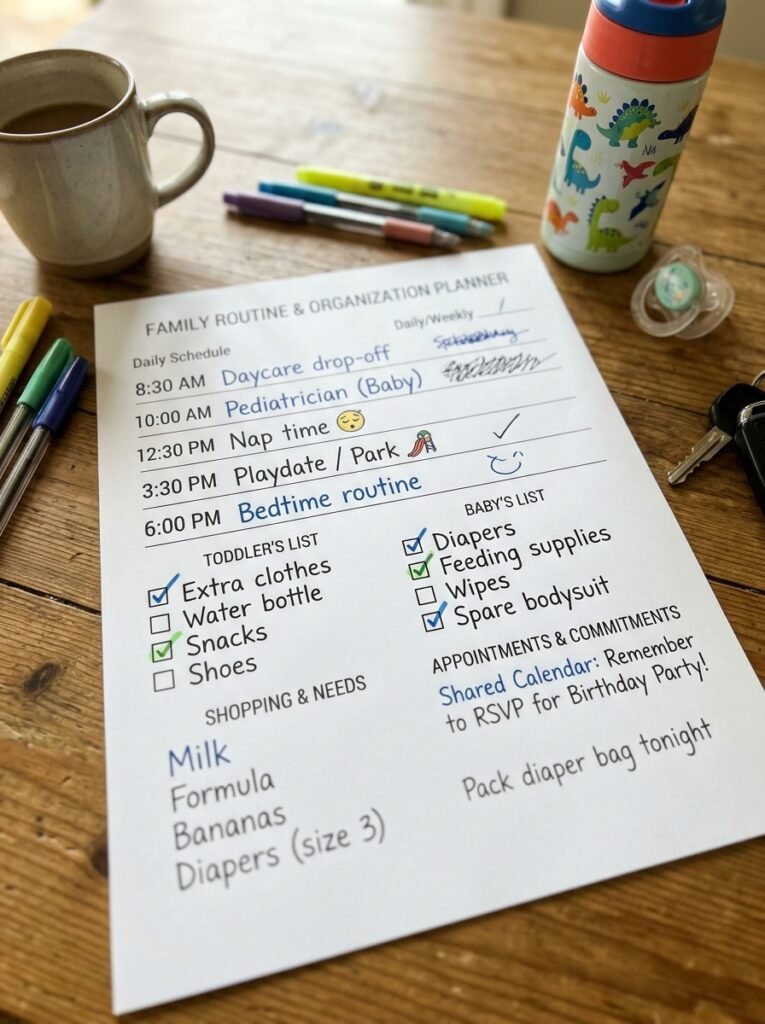
When you are managing a toddler’s schedule alongside a baby’s feeding, naps, and diaper changes, keeping track of everyday routines can be helpful. A simple planner or notes app can help you remember appointments, shopping needs, daycare items, and upcoming family activities.
You can create a short daily checklist for each child. For example, your toddler’s list might include extra clothes, water bottle, snacks, and shoes. Your baby’s list might include diapers, feeding supplies, wipes, and a spare bodysuit.
A shared calendar can also help you plan appointments and family commitments. Keep the system simple so it supports your routine rather than becoming another task to manage.
Tips for Staying Organized When Caring for a Toddler and a Baby
Managing two little ones can make even simple daily activities feel busy. A few small habits can help reduce last-minute stress and make outings easier.
- Prepare the diaper bag ahead of time: Restock diapers, wipes, spare clothes, and other essentials after returning home.
- Use separate pouches: Keep baby and toddler supplies in different compartments so you can find items quickly.
- Create a simple checklist: A short list near the diaper bag can help you remember important items before leaving.
- Keep spare clothes accessible: Store extra outfits in waterproof or washable bags.
- Plan around both children’s routines: When possible, consider feeding, nap times, and your toddler’s energy levels before scheduling outings.
- Keep essentials within reach: Store frequently used items in practical compartments, while keeping small or unsafe objects away from children.
- Avoid overpacking: Bring what you realistically need for the length and type of outing.
The goal is not to carry everything you own. It is to have a reliable selection of essentials that makes everyday parenting a little more manageable.
Frequently Asked Questions
What should a mom pack when going out with a toddler and a baby?
A practical diaper bag may include diapers, wipes, a changing mat, spare clothes for both children, feeding supplies, toddler snacks, water, burp cloths, and a few age-appropriate activities. The exact items depend on the length of the outing and each child’s needs.
What type of diaper bag is best for two children?
A spacious backpack-style diaper bag with several compartments can be convenient because it keeps your hands free. Look for comfortable straps, easy-to-clean materials, and enough space to separate baby and toddler supplies.
How many spare outfits should I pack?
For a typical outing, one complete spare outfit for the baby and an extra outfit or at least a spare top and bottom for the toddler can be a useful starting point. Longer outings may require additional clothing.
What are useful activities for a 2–3-year-old during outings?
Board books, simple picture games, age-appropriate coloring activities, and familiar soft toys can help keep a toddler occupied. Always check that toys are safe for the child’s age and keep small parts away from babies.
Do I need both a stroller and a baby carrier?
Not necessarily. A stroller and carrier serve different purposes, so the best choice depends on your routine, baby’s age, and the places you visit. Some families find both useful, while others rely mainly on one.
How can I make outings with two young children easier?
Prepare your bag in advance, keep supplies organized in separate pouches, plan around feeding and nap routines when possible, and avoid packing unnecessary items. A simple checklist can also help you leave home with less stress.
This post may contain affiliate links. As an Amazon Associate I earn from qualifying purchases.